Log in


Dirt can cut solar output, but cleaning only pays off when the numbers make sense.


Trump commercials paid for by the US government continued airing on TV the day after a judge blocked the ads because they likely violate a US law against government-funded publicity or propaganda.
In the most widely aired commercial, Trump railed against his perceived enemies and said he would "liberate America from these villains once and for all.” The campaign also included a commercial praising Trump's record as president, another in which Trump calls the US the "most exceptional nation ever to exist in human history," and commercials related to the Iran war and the capture of Venezuelan President Nicolás Maduro.
US District Judge Jennifer Rochon issued a temporary restraining order (TRO) blocking the ads on Sunday, October 11, which took effect at 6:45 pm that night. The order said the government must cancel the ads, "including those placements for the evening of October 11, 2026."
The Trump administration had told the court on October 10 that the Department of Homeland Security (DHS) advertising purchases were set to expire on October 11 and would not be renewed. Despite that, the ads continued airing the night of October 11 and on part of October 12. This was also a week after Trump's October 5 statement that he would start paying for the ads "myself, and with money I raised for MAGA, Inc."
A US attorney yesterday filed a status report saying that the government is now complying with the order and issued an apology. "As Your Honor is aware, the Court emailed the TRO to the parties yesterday at 6:46 p.m.," US Attorney Jamie McDonald wrote in a filing. "Counsel for the Government emailed the TRO to agency counsel at 7:58 p.m. Agency counsel did not become aware of Government counsel’s email until this morning. The undersigned apologizes to the Court and the plaintiffs."
The ads aired as part of a $20 million purchase order that US Customs and Border Protection (CBP) made on September 20 with LMD Agency, an ad firm. The DHS told the court that the ad placements through October 11 cost $19 million.
In the previous Trump administration filing opposing the motion for a temporary restraining order, one of the government's arguments was that a court order was unnecessary because the ads would not run past October 11. It said:
DHS issued a purchase order to obtain media services from a vendor in support of U.S. Customs and Border Protection (CBP) for placing national media buys. The vendor has currently purchased media buys under the terms of the purchase order through tomorrow, October 11, 2026. DHS has directed the vendor not to make any additional media buys past October 11, and DHS has no plans to make any additional media buys under the purchase order or otherwise use appropriated funds on any similar contracts for the creation or distribution of the media that is the subject of this lawsuit. Accordingly, the alleged offending conduct will end tomorrow, and Plaintiffs therefore will suffer no harm, let alone irreparable harm, absent an injunction.
The Washington Post reported yesterday that the ads kept running after the restraining order took effect. Nonprofit advocacy group Common Cause and other groups that sued the government submitted a filing later in the day notifying the court of the government's noncompliance.
The Trump ads continued airing on programs including 60 Minutes, ABC World News Tonight, and America’s Funniest Home Videos. They ran nearly 400 times after the restraining order took effect, including 32 times on Monday, according to AdImpact data cited in the plaintiffs' court filing.
"Plaintiffs do not presently seek contempt sanctions," the groups said. "But given that the ads have continued to run on October 12—the day after Defendants insisted the ad-buy was no longer effective—Plaintiffs request a status conference to determine Defendants’ compliance."
After the government filed its status report, Rochon scheduled a hearing for Wednesday "to discuss this and next steps in this action." The lawsuit is in US District Court for the Southern District of New York.
The plaintiffs are Common Cause; Robert Hunter, a Democratic candidate for a state legislature seat in Alabama; Service Employees International Union Local 32BJ; and Empire State 32BJ SEIU PAC. Defendants include DHS, the Office of Management and Budget (OMB), and the Executive Office of the President.
Rochon found that the plaintiffs are likely to succeed in their claim that the Trump administration violated the 2026 Consolidated Appropriations Act requirement that no funding may be used "for publicity or propaganda purposes within the United States not heretofore authorized by Congress."
"Defendants do not contest that the at-issue advertisements are purely partisan and unconnected to DHS’s official functions," Rochon wrote. "Thus, the Court finds that Moving Plaintiffs are likely to succeed in showing that the advertisements are impermissible 'publicity or propaganda' under Section 718 [of the Consolidated Appropriations Act]."
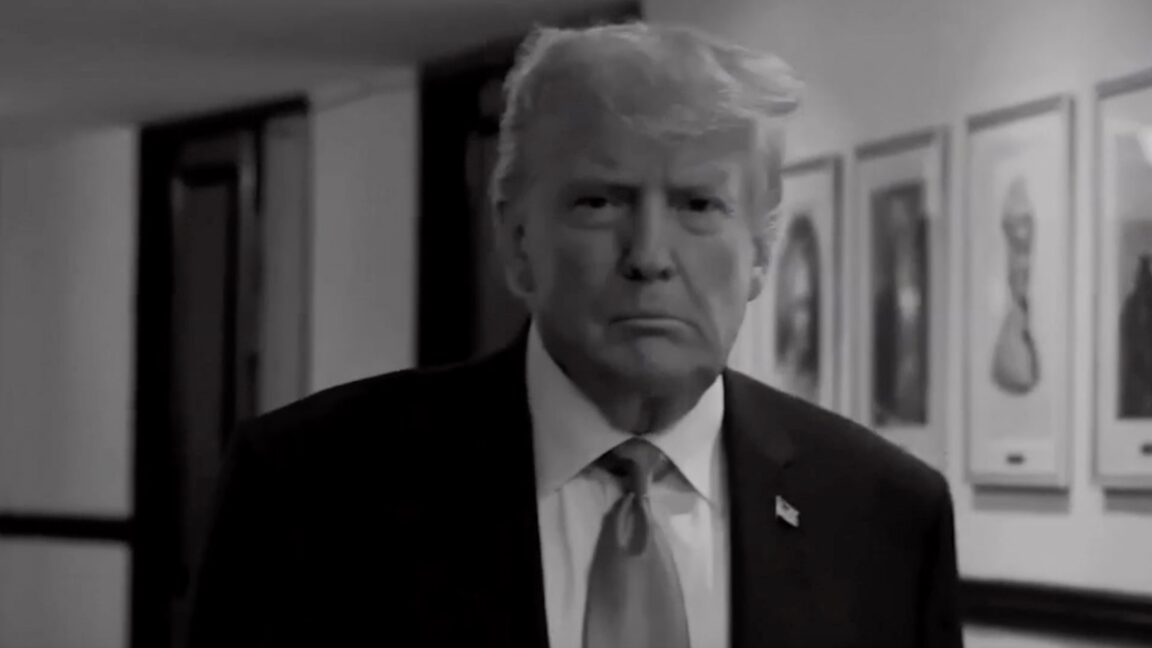
One of the ads "is almost identical to one used during President Trump’s 2024 campaign, other than the fact that its funding disclaimer now identifies the United States government rather than his presidential campaign," Rochon wrote. "It depicts President Trump walking down a hallway while delivering a series of statements about his political adversaries. Among other things, he promises to 'demolish the deep state,' 'drive out the globalists,' 'cast out the communists, Marxists and fascists,' 'throw off the sick political class that hates our country,' and 'rout the fake news media.' This advertisement provides no information about DHS’s official functions."
As of October 8, the ad "had aired approximately 9,679 times, generating an estimated 972 million impressions at an estimated cost exceeding $9.09 million," Rochon wrote. Another $6.3 million was estimated to have been spent on four other government-funded ads challenged in the lawsuit. That's about $15.4 million as of October 8, and more was spent over the next few days.
Rochon found "a clear and substantial likelihood" that the Trump administration violated the Administrative Procedure Act "because Congress did not appropriate funds for DHS to spend on disseminating the challenged advertisements." Rochon said a restraining order was necessary despite the DHS claim that it had "no plans" to continue running the ads.
"Defendants also have not provided reasonable assurances that OMB will not reapportion funds from another source to continue running similar advertisements," she wrote.
The temporary restraining order is in place for only two weeks, but it can be converted into a preliminary injunction that would keep the ads off the air while litigation continues. Trump, the White House, OMB, and DHS are facing a similar lawsuit filed by the Democratic National Committee in the federal court in the District of Columbia. A hearing on a motion for a temporary restraining order in that case is scheduled for Thursday.


Read more of this story at Slashdot.
Read more of this story at Slashdot.
Read more of this story at Slashdot.
For about a decade, the mainstream understanding has been that psychedelics cause chaos in the brain. Brain networks—the stable patterns of communication that handle vision, attention, or our sense of self, and more—loosen and start talking to each other all at once. EEG traces get noisier and more complex. “Think of the networks of the brain as highways,” says Devon Stoliker, a neuroscientist at Monash University. “Under psychedelics, these highways break down into many different directions.”
In a recent Nature study, Stoliker’s team designed an experiment to test whether these directions are truly chaotic and random. Researchers gathered 62 people who had never taken a psychedelic before, gave them 19 milligrams of psilocybin, a common psychedelic found in certain fungi, and scanned their brains. Then, they used AI to analyze the drugged and sober brain scans. What emerged was not exactly chaos.
Stoliker thinks chaos is not a satisfactory explanation for psychedelics’ effect on the brain. “It never really explained why an individual would have a meaningful experience, why they might have insight, why they might experience clarity, and why these might translate into positive psychological changes,” Stoliker says. To investigate if there are other explanations, he and his colleagues designed a study called PsiConnect.
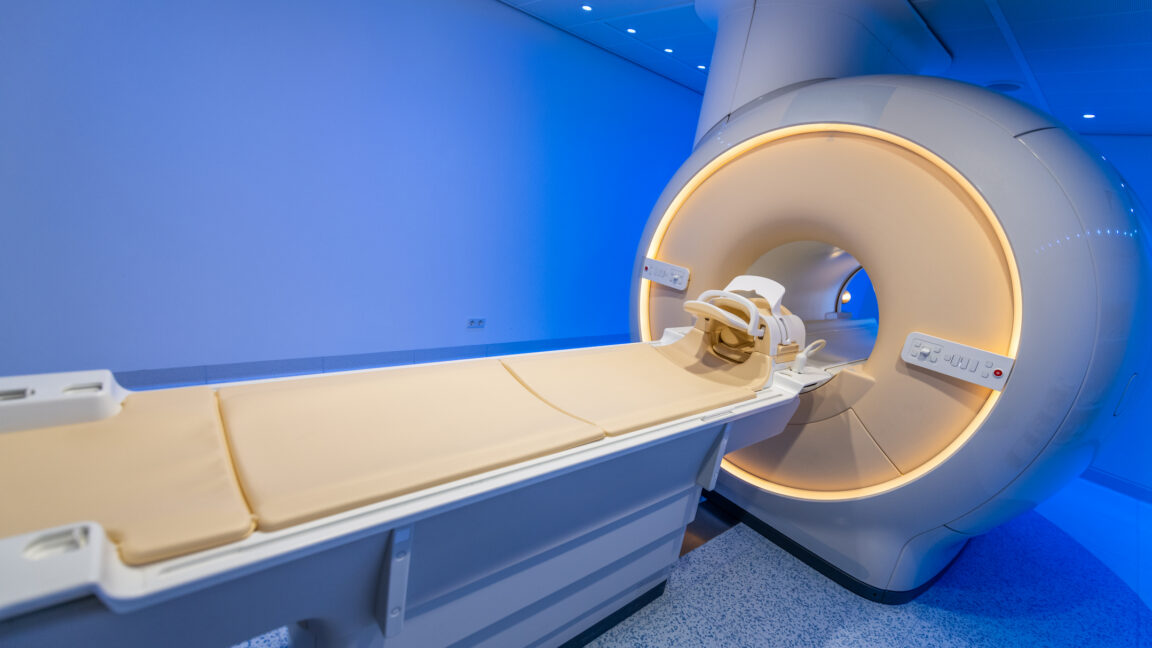
Volunteers went through the same four-part sequence twice, once sober and once on psilocybin. The sequence included putting participants in four different settings or contexts: eight minutes of lying at rest, a guided meditation, an 11-minute curated music playlist, and finally six minutes of eyes-open video of clouds moving across a sky. Each participant did all four inside an MRI scanner about 80 minutes after dosing, and again on EEG about 150 minutes after.
There were no cognitive tasks researchers routinely go for in brain studies, but there was a purpose behind this omission.
“We wanted ecological validity,” Stoliker says. “We wanted to know what the brain was like when somebody was having an authentic, uninterrupted psychedelic experience. If somebody took a psychedelic in a therapeutic setting, you wouldn't have them completing tasks.” Stoliker also points out that there's evidence that giving someone a task mid-trip pulls them out of the state—a phenomenon researchers sometimes call grounding. “Once you introduce these sorts of tasks, you're actually interrupting the very phenomena you are seeking to measure.” And it worked.
Half of the participants ranked their session among the most meaningful experiences of their lives, and 24 put it in their personal top five. Stolkier and his colleagues started analyzing their brain scan data to find out why.
Measuring global functional connectivity—how much influence each patch of cortex exerts over the rest—the team found that, when participants had their eyes closed, sensory regions lost sway while associative regions gained. “It seems like the brain's ability to construct reality, or imagination, or our associations, our beliefs, our sense of self—these faculties had more dominance over sensory areas,” Stoliker says, stressing that the interpretation is a hypothetical. “This could help explain why people have meaningful, complex imagery experiences, why they have mystical experiences with imagery that is personally relevant to them.”
Another observation the team made was that connections within each brain network weakened, connections between networks strengthened. The brain's modularity, a parameter that describes how cleanly neurons stay sorted into specialist teams, dropped across all four parts of the experimental sequence.
What’s more, researchers found that, when sober, activity in a brain with its eyes shut looked very different from a brain watching a movie. Under psilocybin, that difference nearly evaporated. In the visual network, the gap between eyes-open and eyes-closed connectivity shrank by 85 percent. The results from the EEG session independently confirmed that, with alpha-band activity (normally a marker of the brain gating visual input) reduced by nearly half.
“When somebody takes a psychedelic and they're able to close their eyes and see complex imagery, there seems to be less boundary between the internal and external world than we ordinarily experience,” Stoliker says.
Regardless of these details, the results rather accurately reproduced the chaos in the brain so many researchers claimed psychedelics caused. This chaos, though, turned into order when the team processed their data in a slightly unorthodox way.
Scientists usually do two acts of averaging in a standard brain imaging study. The first is averaging over time. An eight-minute brain scan comprises a few hundred successive images of the whole brain. To understand how two specific regions work together, researchers conventionally average all these images down to a single number describing how well the two regions' activity matched up across the whole eight minutes.
The problem with this analysis is that it runs the risk of missing ordered structures that appear for a brief period and then disappear into chaos.
The second analysis is averaging over people. Having produced one such number per participant, the standard approach then pools all of them into a group average, on the assumption that individual differences are noise that will be canceled out. Stoliker’s study was focused on individual experiences, so he wanted to avoid that.
Instead, the team fed the moment-by-moment activity of 332 brain regions into CEBRA, a machine-learning tool that compressed the data down to its essential structure while preserving the order of events. For each individual, it produced a trajectory—a path traced through a three-dimensional space, one point for each moment of the scan.
“When they're not under psilocybin, the brain activity is less differentiated by context,” Stoliker says. "But under psilocybin, we see that the activity becomes organized across time and more clearly differentiated by context.” The trajectories separated into four distinct clusters corresponding to rest, meditation, music, and the movie. A classifier could read a moment of brain activity and say which one the person was in.
It turned out the performance of that classifier scaled with how profound the participants described their experience as being.
To find out which parts of the brain were doing the work, the team replaced one network's psilocybin activity with its sober version and checked how badly the classifier degraded. The default mode network and the visual network each accounted for over 20 percent of the effect. “The default mode network is strongly associated with the sense of self: daydreaming, mind wandering, thinking about yourself. It's often been called the narrative self,” Stoliker explains. “On the other end of this gradient, more externally oriented, is the visual system.”
Under psilocybin, the two became less differentiated, which the team thinks explains why participants reported a subjective experience of the self and the external world becoming less separate, a state Stoliker calls “embeddedness.”
“Theoretically, we could suggest that psychedelics are temporarily altering the organization of brain networks that ordinarily help maintain this separation that we experience,” he says. "It really challenges the idea of whether the internal world and external world are separate and highlights the idea that the brain may be responsible for constructing both.”
The day after the session, participants rated whether various things had shifted, like sense of connection to themselves, to others, to nature, along with peace, acceptance, and creativity, all on a scale running from –100 to 100. “For the vast majority of our participants, we found they had positive psychological changes the next day,” Stoliker says. The data from the brain reading classifier the team used for discriminating among meditation, rest, the movie, and the music tracked with the size of that shift.
In the future, Stolkier hopes to use this for therapeutic purposes. If context isn't just mood-setting but is mechanically shaping brain organization, Stolkier argues, then the room, the playlist, and the instructions start to look like clinical variables a clinician could deliberately tune to improve therapeutic outcomes. But there are details the team must work out first.
As of now, the researchers admit that when two people report identical “embeddedness” scores, they can potentially have very different subjective experiences. Also, all the volunteers in Stoliker’s study were healthy individuals, not patients suffering from psychological or psychiatric disorders that potential therapies using psychedelics could be aimed at.
Finally, we still don’t know how exactly variables like music or visuals should be tuned. “That's a future avenue where we need more research to determine exactly what conditions should be optimized, and for who. It's quite possible we would want to take different approaches for each individual, or depending on what their diagnosis is,” Stoliker says. “Still, finding this level of organization hidden underneath that disorder and chaos has some really good explanatory value.”
Nature, 2026. DOI: 10.1038/s41586-026-10910-z